
Advertisements
Finding the Right Desk Height for Your Body (And Why I Wish I’d Done It Sooner)
Here’s a stat that honestly blew my mind — roughly 1.71 billion people worldwide deal with musculoskeletal conditions, and a huge chunk of that is tied to poor workplace ergonomics. I spent nearly three years hunched over a desk that was way too high for me before I finally figured out what was going on. My neck was killing me, my shoulders were practically glued to my ears, and I just assumed it was “normal office stuff.”
Spoiler: it wasn’t normal. It was my desk.
Finding the right desk height for your body is one of those things that sounds boring until you actually fix it — and then you wonder why nobody told you sooner. So let me save you the years of unnecessary pain I went through.
Why Desk Height Matters More Than You Think
When your desk is too high, your shoulders shrug upward and tension builds in your traps and neck. Too low, and you’re slumping forward like a question mark, putting crazy pressure on your lower back. Either way, you’re setting yourself up for chronic discomfort.
Advertisements
I used to think my chair was the problem. Spent like $400 on a fancy ergonomic chair, which honestly did help a little. But the real game-changer was realizing that my desk surface was sitting at 31 inches — and for my 5’7″ frame, that was just too dang high.
So What’s the Ideal Desk Height?
The standard desk height is about 28 to 30 inches, and that works for people roughly between 5’8″ and 5’10”. But here’s the thing — we’re not all the same height, and a one-size-fits-all approach is basically a recipe for back pain.
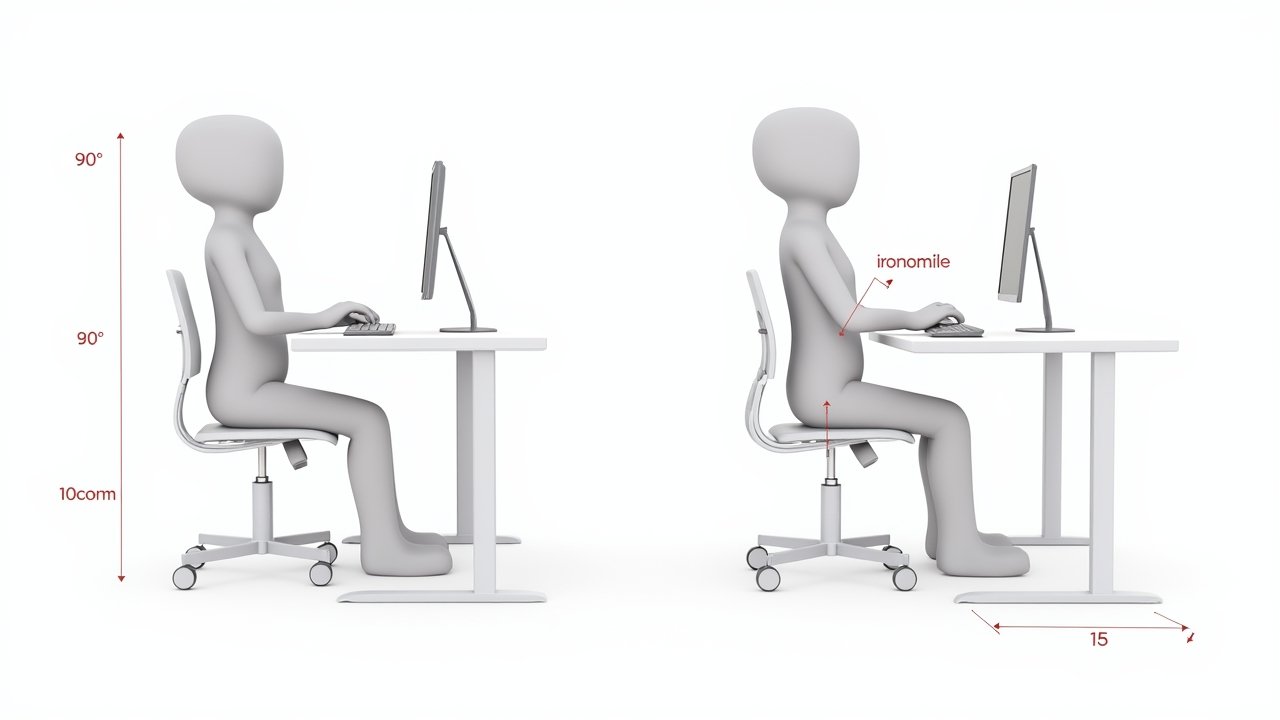
The general rule is this: when you’re seated, your elbows should rest at a 90-degree angle with your forearms parallel to the floor. Your feet should be flat on the ground and your thighs roughly parallel to the floor too. If you can hit those positions, you’ve likely found your sweet spot.
A really handy tool I recommend is the Omni Desk Height Calculator. You plug in your height and it gives you recommended desk and chair heights. I wish I had known about it years ago.
Quick Reference by Height
- 5’0″ to 5’4″: Desk height around 24–26 inches
- 5’5″ to 5’9″: Desk height around 26–28 inches
- 5’10” to 6’1″: Desk height around 28–30 inches
- 6’2″ and above: Desk height around 30–32 inches
These are rough guidelines, obviously. Arm length, torso proportions, and even the thickness of your chair cushion can shift things around a bit.
What If You Can’t Change Your Desk?
Look, not everyone can just go buy a height-adjustable standing desk. I get it — I was on a teacher’s salary when I first started dealing with this stuff. So here’s what actually worked for me on a budget.
First, I adjusted my chair height upward and added a footrest so my feet weren’t dangling like a kid on a barstool. That alone made a noticeable difference. You can grab a simple ergonomic footrest on Amazon for under $30.
Second, I got a keyboard tray that mounted under my desk. This effectively lowered my typing surface by about three inches without touching the desk itself. Absolute lifesaver, honestly.
Standing Desks — Worth the Hype?
I eventually did get a sit-stand desk, and I’m not gonna lie, it changed my workflow completely. Being able to toggle between sitting and standing throughout the day keeps my energy up and my posture in check. The key is making sure you set the standing height correctly too — elbows at 90 degrees, monitor at eye level.
One mistake I made early on was standing for way too long. My feet were wrecked by the end of the day. Alternating every 30 to 45 minutes seems to be the sweet spot for most people.
Your Back Will Thank You Later
Getting the right desk height for your body isn’t glamorous, but it’s one of the most impactful ergonomic adjustments you can make. Take 10 minutes today to measure your setup and compare it to the guidelines above. Your neck, shoulders, and lower back are literally begging you to.
And hey — if you found this helpful, there’s a ton more practical advice waiting for you over at Ergonomic Flow. We’re all about making your workspace work for you, not against you.