Advertisements
The Foam Rolling Office Workers Guide: How I Saved My Aching Back (And You Can Too)
Here’s a stat that honestly scared me — the average office worker sits for about 10 hours a day. Ten! I used to be that person, hunched over my keyboard like some kind of human question mark, wondering why my shoulders felt like concrete by 3 PM. Then a physical therapist friend handed me a foam roller and said, “Just try it for a week.” That was two years ago, and I haven’t looked back since.
If you’re an office worker dealing with tight hips, a stiff neck, or that gnarly lower back pain that creeps in after lunch, this foam rolling guide is for you. It’s honestly one of the simplest self-myofascial release techniques you can do, and it costs practically nothing.
Why Sitting All Day Wrecks Your Body
So here’s the thing nobody tells you when you start a desk job. Prolonged sitting shortens your hip flexors, rounds your shoulders forward, and basically puts your spine in a position it was never designed to hold for hours on end. Over time, these postural imbalances create muscle knots and trigger points that make you feel way older than you actually are.
I remember one Monday morning where I literally couldn’t turn my neck to the left. Like, at all. My coworkers thought I was ignoring them, but nope — my upper trapezius was just completely locked up from a weekend of bad posture and zero movement.
Advertisements
What Foam Rolling Actually Does
Foam rolling is basically a form of self-massage that targets your fascia — that connective tissue wrapping around your muscles. When you roll over tight spots, you’re increasing blood flow, breaking up adhesions, and helping your muscles return to their proper length. The research from the Journal of Athletic Training supports that it genuinely improves range of motion and reduces muscle soreness.
Think of it like ironing out wrinkles in a shirt. Except the shirt is your back, and the wrinkles are from sitting in a cheap office chair for eight hours straight.
The Best Foam Rolling Routine for Office Workers
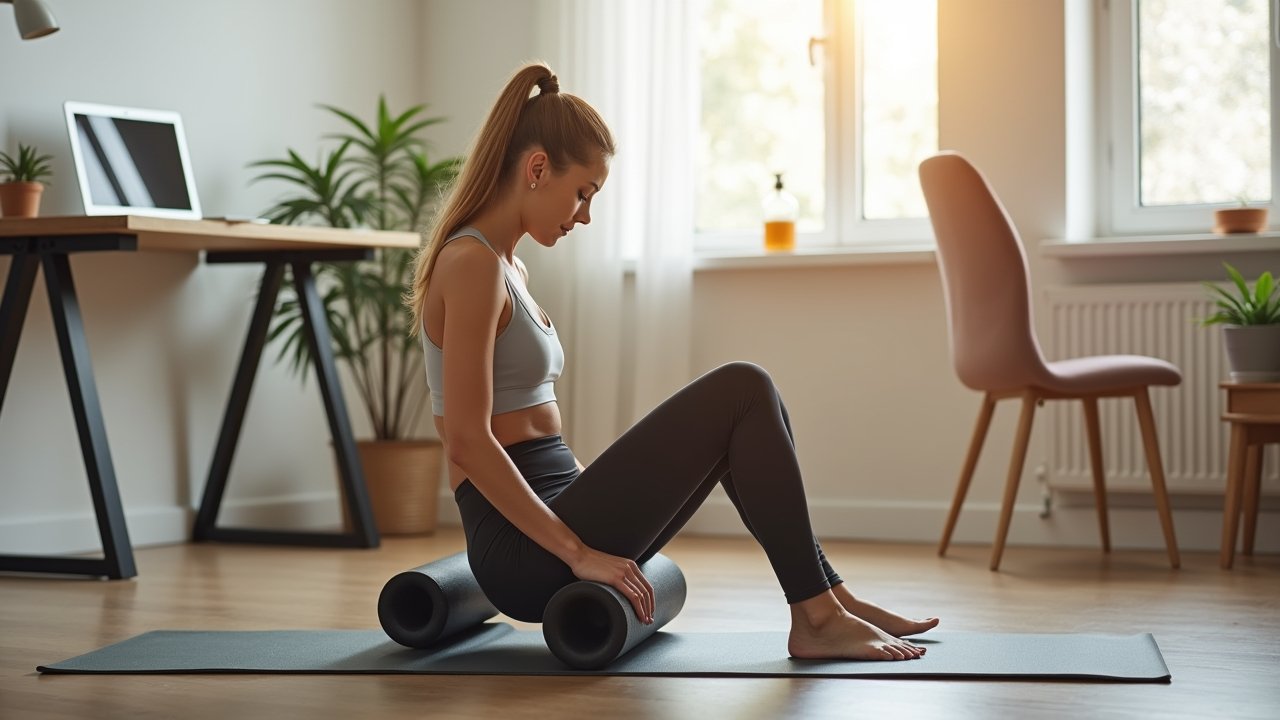
Alright, here’s the good stuff. This is the exact routine I do either before work, during lunch, or right when I get home. It takes about 10 minutes and targets all the areas that get destroyed by desk work.
Upper Back (Thoracic Spine)
Place the foam roller horizontally under your upper back. Cross your arms over your chest and slowly roll from your mid-back up to your shoulder blades. Spend about 60 seconds here — you’ll probably hear some cracks, and honestly it feels amazing.
Hip Flexors and Quads
Lie face down with the roller under the front of your thighs. Roll from just above your knee up to your hip crease. This one hurts a bit at first, not gonna lie, but tight hip flexors are the number one culprit behind that achy lower back feeling office workers always complain about.
Glutes and Piriformis
Sit on the roller with one ankle crossed over the opposite knee. Lean into the side of your crossed leg and roll slowly. I once skipped this area for weeks and ended up with sciatic-like pain shooting down my leg — lesson learned the hard way.
Neck and Shoulders
For this one, I actually prefer a smaller lacrosse ball against a wall. Place it between your shoulder blade and spine, then gently lean in and move around until you find the tender spots. Hold for 20-30 seconds on each knot.
Mistakes I Made So You Don’t Have To
- Rolling too fast — slow and controlled wins every time
- Rolling directly on my lower back (don’t do this, your spine will not thank you)
- Using a rock-hard roller on day one when a softer density foam roller would’ve been way more appropriate
- Forgetting to breathe — sounds dumb, but tension makes you hold your breath
Your Body Will Thank You Tomorrow
Look, foam rolling isn’t some miracle cure. But for desk-bound workers dealing with muscle tightness, poor posture, and daily discomfort, it’s been an absolute game-changer in my routine. Start with just five minutes a day and adjust based on what your body’s telling you.
And please, if you have any existing injuries or chronic pain conditions, chat with a healthcare professional before going to town on a foam roller. Safety first, always.
Want more practical tips on making your workspace and body feel better? Head over to the Ergonomic Flow blog — we’ve got tons of guides designed specifically for people who spend their days at a desk. Your future self will appreciate it!